Tell us about the job
Takes about a minute. No obligation.
A furnace here runs through every season, cycling its burner and heat exchanger without the long idle periods that let smaller faults go unnoticed in milder places. Homes in Copper River Census Area, AK run heat in every month of the year. The ignition system, the heat exchanger, and the burner assembly carry that load continuously, and those are the parts where stress shows up first when a repair call comes in. A contractor diagnosing a fault here works through those components before looking elsewhere, because the runtime history of the equipment points there.
Ductwork routed for a furnace that is no longer in the house does not automatically fit what replaced it. Half the homes in Copper River Census Area, Alaska were built in 1985 or earlier (2020-2024 ACS 5-year). A contractor opening a furnace here often finds that the distribution side has been adapted over the years, and those adaptations leave their own problems: collapsed flex sections, joints that have separated, or a trunk line that was never balanced for the current unit. The repair scope on the furnace itself is one thing; what the ductwork around it has become is frequently a separate finding.
The Parts of a Furnace a Contractor Checks First
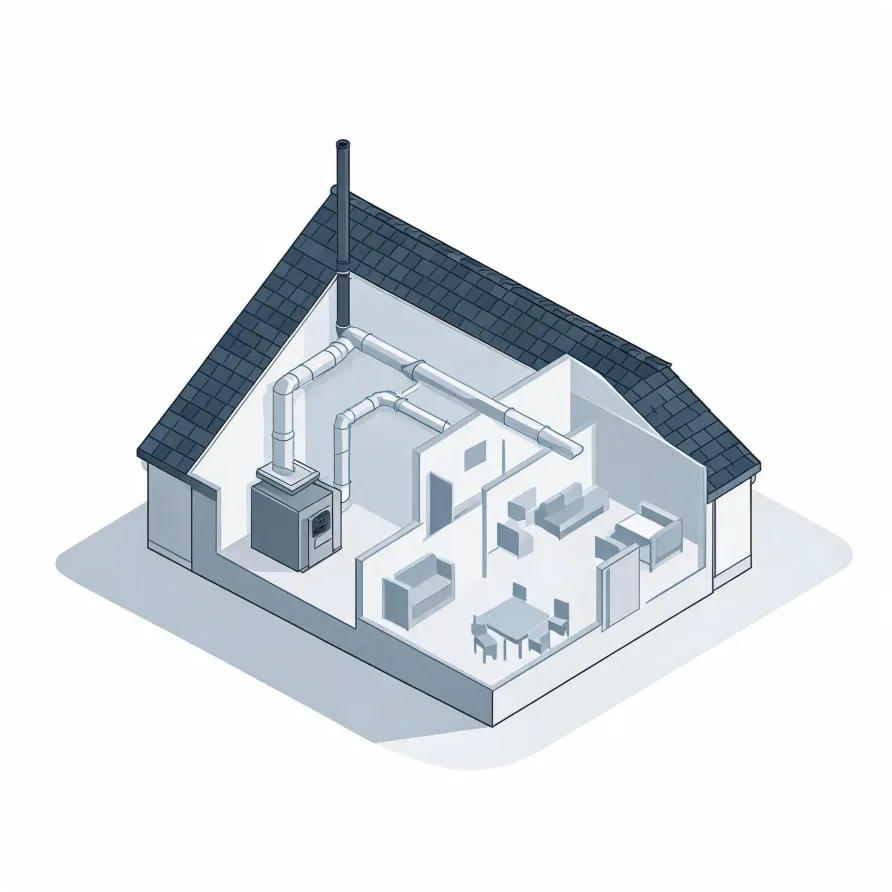
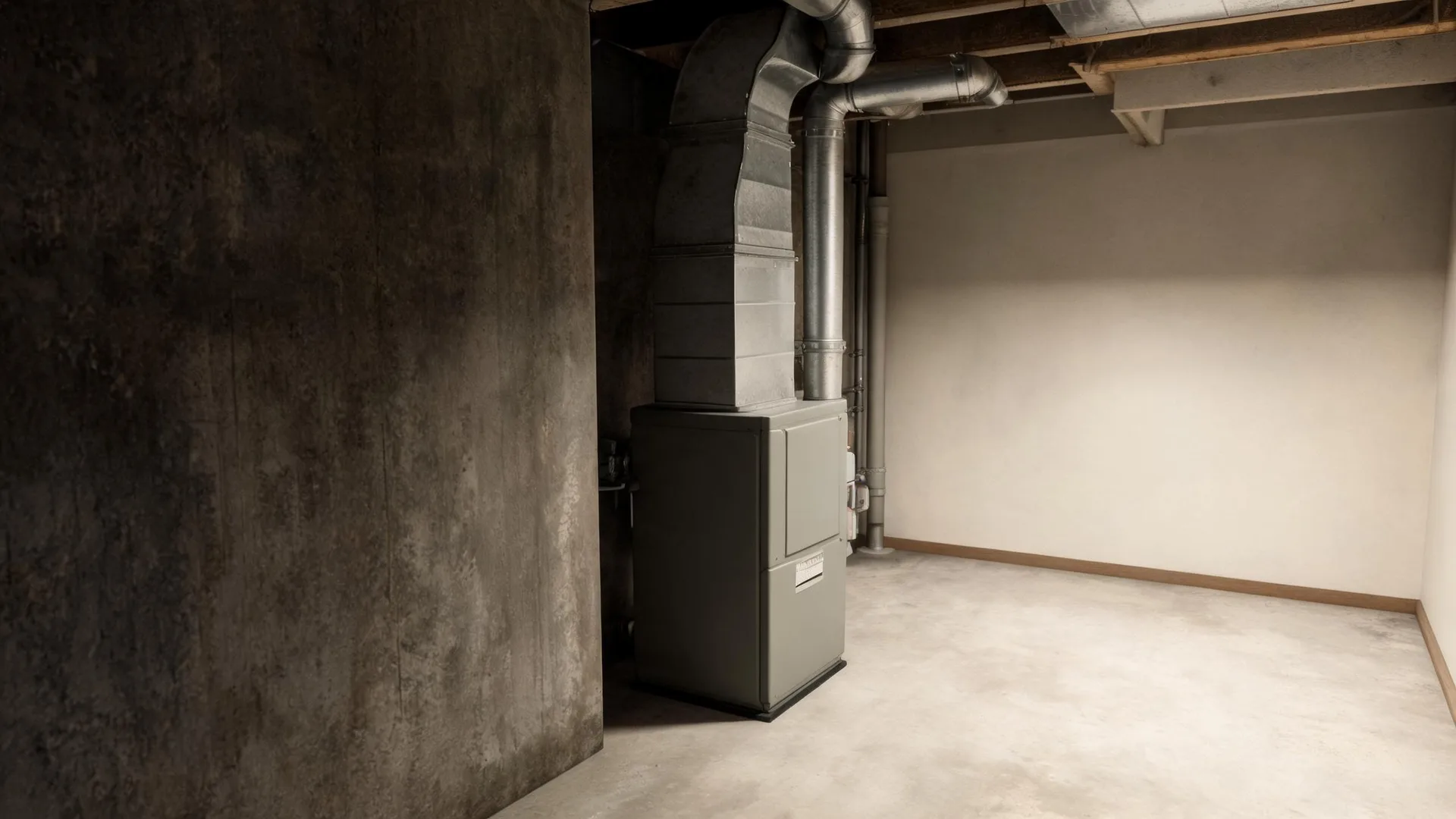
The furnace cabinet sits in a utility room, basement, or closet and is the core of the system. Inside it, the heat exchanger is what a contractor reaches for first when a furnace runs but does not warm the house properly, and the burners are the first stop when ignition is the problem. The blower motor, also inside the cabinet, pushes conditioned air into the ducts and shows up as a suspect when airflow is weak or the unit runs noisily.
The flue pipe runs from the cabinet to an exterior wall or roof and carries combustion gases out of the house. A contractor also checks the ignitor and flame sensor, two small components inside the cabinet that together govern whether the burners light and stay lit. The thermostat on the interior wall is examined early because a wiring fault or a failed board there can mimic a furnace problem.
The drawing shows a typical layout, and a licensed contractor determines which components apply to the specific equipment and setup in your home.
Find a contractor in Copper River Census AreaCopper River Census Area, by the numbers
Half the homes in Copper River Census Area, Alaska were built in 1985 or earlier (2020-2024 ACS 5-year).
U.S. Census Bureau, 2020-2024 American Community Survey 5-Year EstimatesCopper River Census Area, Alaska holds 2,442 housing units (2020-2024 ACS 5-year).
U.S. Census Bureau, 2020-2024 American Community Survey 5-Year EstimatesOwners occupy 68.5% of the occupied homes in Copper River Census Area, Alaska (2020-2024 ACS 5-year).
U.S. Census Bureau, 2020-2024 American Community Survey 5-Year EstimatesCodes & Standards Covering Furnace Repair in Copper River Census Area, Alaska5 sourced rules and standards
What HVAC Repair Looks Like in Copper River Census Area
Non-weatherized gas furnaces manufactured on or after November 19, 2015 must reach 80.0 percent AFUE.
Non-weatherized oil-fired furnaces manufactured on or after November 19, 2015 must reach 83.0 percent AFUE.
Mobile home gas furnaces manufactured on or after November 19, 2015 must reach 80.0 percent AFUE.
Non-weatherized gas furnaces manufactured on or after December 18, 2028 must reach 95.0 percent AFUE, up from the 80.0 percent minimum that applies to units manufactured before that date.
Licensing Rules for HVAC Repair in Copper River Census Area, Alaska
Alaska requires a certificate of registration as a contractor: a person may not submit a bid or work as a contractor until the department has issued one.