Alaska's Furnaces
A gray high-efficiency furnace with two white PVC vent pipes stands beside galvanized sheet-metal ductwork in a dim basement with exposed joists and a concrete floor.

Matched to your furnace job

How long a furnace lasts in Alaska

Most furnaces run 15 to 20 years, but what's actually in your basement or utility closet, and how hard it's had to work through winters here, changes that. This page gets into what wears a furnace down and what the age of yours really tells you. When you're ready to look at a new one, you can get matched with a local contractor who installs these year-round and knows what to check before quoting the job.

Get a local pro

A gas furnace in Alaska typically lasts 15 to 20 years. What shortens that is how long and how hard it runs. Winters here mean the furnace can be cycling on for most of the day for months at a stretch, and that kind of steady demand wears on the heat exchanger and the blower motor faster than it would somewhere with a short, mild winter. Summers here are hot and dry, so the furnace gets a real break for a few months, but that rest doesn't undo the load of the rest of the year. If your furnace is past 15 years, pay attention to how often it's running and whether it's keeping up on the coldest days. A furnace nearing the end of its life tends to run longer cycles to hold the same temperature, and that shows up on your power bill before it shows up as a breakdown.

A gray high-efficiency furnace in a basement with PVC vent pipes, sheet-metal ductwork, copper and insulated pipes, a water heater at left, and an unfinished wood-stud wall at right.

Furnace running right

This furnace sits clean and dry, with tight PVC flue pipes and ductwork that fits square. It fires, runs its cycle, and shuts off without you noticing. No rust on the cabinet, no soot around the burner, no short-cycling where it kicks on and off every few minutes. A furnace like this is keeping up with what an Alaska winter asks of it.


An older beige furnace with louvered front panels stands on a concrete basement floor beside galvanized ductwork, metal and plastic pipes, exposed wood framing, and a cylindrical water heater at right.

Furnace losing ground

The galvanized ductwork and flue pipes on this one are older styles you don't see installed anymore. Look for rust on the cabinet, a yellow or flickering flame instead of steady blue, or rooms that stay cold no matter how long it runs. If it's cycling more than it used to just to hold the same temperature, it's working harder for less heat.

Is your furnace telling you something this winter

Listen to it the next time it kicks on. A furnace that's wearing out runs longer than it used to, or it cycles on and off more than it should, trying to keep up with the cold outside. You might hear a rattle at startup, a bang from the burner lighting, or a groan from the blower that wasn't there before. Check the color of the flame. It should burn blue; yellow or flickering means something's off with combustion. Soot around the burner door or a smell of exhaust inside the house points to a bigger problem, since a cracked heat exchanger can let combustion gases into your air. If your gas bill has climbed without a colder winter to explain it, the furnace is working harder to do the same job.

A gray-haired, bearded man in a dark coat dusted with snow stands smiling in a dimly lit room with a lamp, mirror, framed art, and a sofa in the background.
An older man with white hair and a beard, wearing a dark snow-dusted coat and scarf, stands in a warmly lit interior hallway with a framed landscape picture, a table lamp and a potted plant behind him, and a snowy view through a window at left.
An older man in a dark snow-flecked overcoat and scarf stands smiling in a warmly lit home entryway, with a glass-paned door showing darkness outside and a lamp-lit room visible through a doorway behind him.
An older man with gray hair and a beard, wearing a dark snow-dusted jacket and scarf, stands smiling in a warmly lit interior hallway with a lit table lamp, a vase of dried branches, and a framed picture in the background.

What actually wears out inside a furnace after years of use?

You've heard the heat exchanger mentioned as the part that matters most, but you want to know what actually happens to it and the rest of the furnace after years of running through Alaska winters. It helps to know what's failing before you're told the whole unit needs to go.

The heat exchanger cracks, and the blower motor and igniter wear out around it

Every time the furnace fires and shuts off, the metal in the heat exchanger heats up and cools back down. Do that thousands of times over a long Alaska winter, year after year, and the metal fatigues. Small cracks start where the metal flexes most. Once that happens, the exchanger has to be replaced, and on an older furnace that usually means replacing the whole unit instead. The igniter wears out from the same repeated heating and cooling, just faster, since it's a thinner piece of metal taking the heat directly. The blower motor's bearings wear down from running long hours, especially in a furnace that's been cycling on for most of the day through the coldest months.

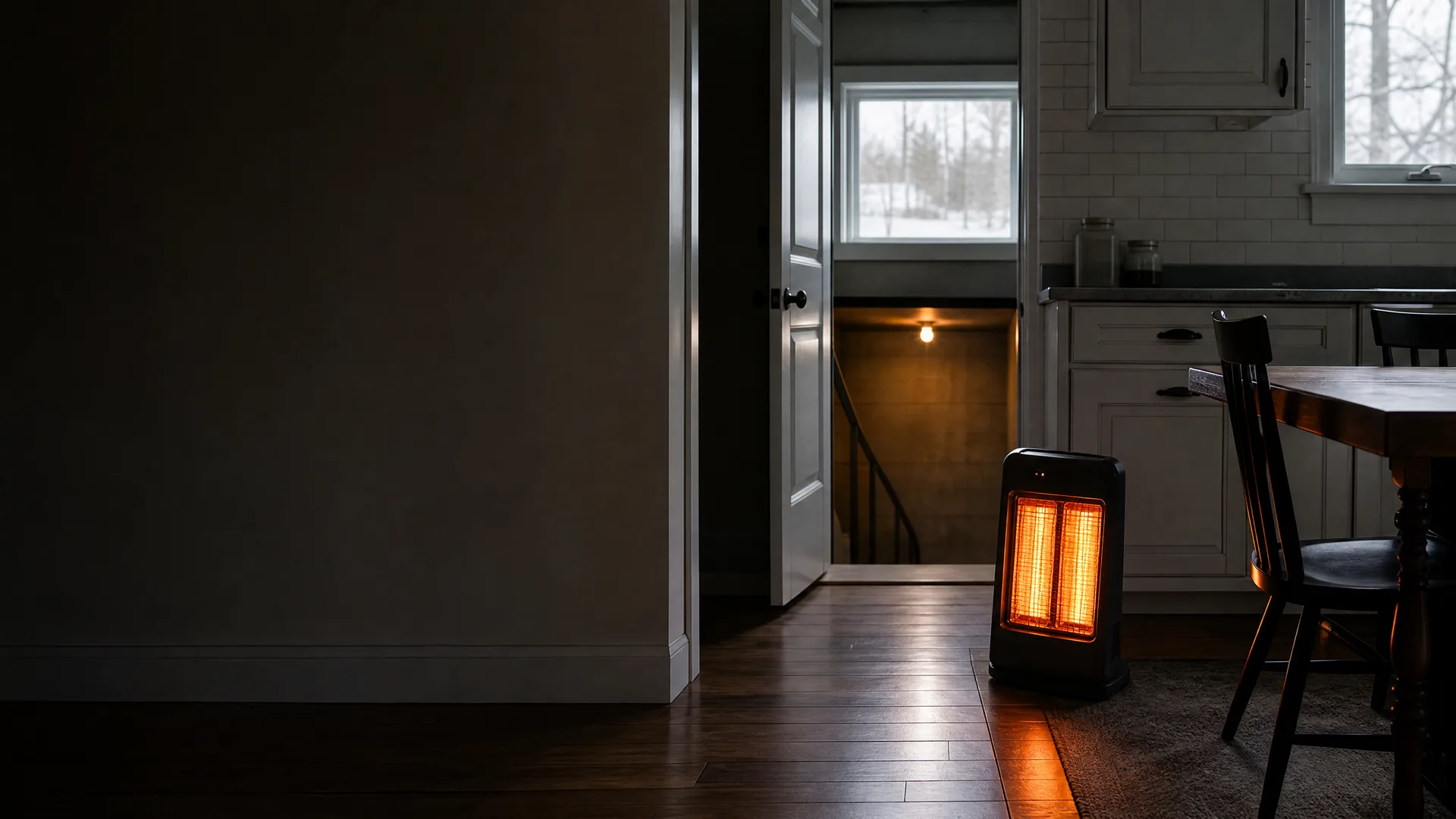
A portable electric space heater with glowing orange elements stands on a dark wood floor in a dim room beside an open door leading to a lit stairway, with a kitchen counter, window and wooden table and chairs at right.

It's early, still dark outside, and the kitchen is cold enough that you dragged the space heater in from the hall closet again. It glows orange by the table while you wait for coffee. The basement door behind it is open a crack, the way you left it after checking the furnace last night when it ran long before the house warmed up. You've been meaning to get someone out to look at it, someone who actually knows these older systems and what tends to go first after a few hard winters. For now the space heater holds the kitchen while the furnace works on the rest of the house.

A furnace pro near you

One installer gets your project, so there's no bidding war over it.

You only hire the pro if you want to.

A furnace that runs 15 hours a day for five months straight puts on more hours in one Alaska winter than a furnace in a milder state logs in two.

That's why two furnaces of the same age, same brand, can be in very different shape. The one here has simply worked harder to keep the house at 68.

An older gas furnace with two white PVC vent pipes stands on a concrete basement floor beside galvanized sheet-metal ductwork, flexible conduit, and piping along a wall.
Before you get your furnace installation
A gray high-efficiency furnace with white PVC venting pipes stands on blocks in a basement next to sheet-metal ductwork, with exposed wood framing on the left and a concrete wall and floor.
After you get your furnace installation

Keeping the furnace you have

If it's heating evenly, running its cycle and shutting off clean, there's no reason to replace it on age alone. A well-built furnace that's been maintained can run the full 15 to 20 years and sometimes longer. Keeping it going usually means staying on top of filter changes and having it checked before the cold sets in, so small wear doesn't turn into a failure in January. If yours is in that range and hasn't shown the signs of strain, there's real value in getting the rest of its years out of it before you spend on something new.

Replacing an aging furnace

Once a furnace is working harder than it used to, that extra run time shows up on your power bill, and here that cost adds up fast. A furnace near the end of its life is also more likely to quit on a night you need it most, which in an Alaska winter isn't something you want to gamble on. Replacing it before that happens means choosing the unit and the timing, rather than dealing with both at once in the cold. A newer furnace sized right for your home runs less to do the same job.

Winter nights average 9°F statewide

A 9°F night means your furnace isn't shutting off much. It fires, runs its cycle, and the thermostat calls again before long. That kind of steady load over a whole winter is what ages a heat exchanger faster than the years on the nameplate suggest.

NOAA nClimDiv 1991-2020 county normals weighted by homes

  1. Burner ignites and heats the metal heat exchanger first

  2. Blower pushes air across the hot heat exchanger

  3. Warm air travels out through the supply ducts

  4. Thermostat satisfied, burner shuts off, blower runs briefly more

A man in a dark blue shirt stands in an open front doorway of a stucco and wood-clad house, facing a blond woman seen from behind in the foreground on a stone walkway.

Where that leaves your furnace

Fifteen to twenty years is the range, and what your furnace has been asked to do every winter is what decides where it falls in that range. A furnace that's cycled hard for years, running long stretches on the cold nights, is further along than its age alone suggests. One that's been maintained and hasn't had to fight as hard can hold up near the far end of it, or past it.

If yours is getting up there, or it's already told you something's off, a local contractor who installs furnaces built for this kind of winter can look at what you actually have and tell you what it needs. You'd be matched with one contractor, someone who works on this equipment all winter and knows what tends to go first in a house like yours, and they'll reach out directly. No guessing from a list of names, just the one call that makes sense for your situation.

Interior corner with a beige sofa holding a dark green and a light cushion and a textured throw, a potted small-leaved tree beside a white-framed window, and a dark shallow bowl on a wooden coffee table in the foreground.
A woman wrapped in a cream textured blanket sits in an armchair beside a lit lamp and a dark window, with an open book in the foreground.
A bearded man in a plaid flannel shirt stands indoors looking out a frost-covered window, with a steaming dark blue mug on the wooden sill and snow-covered trees outside.

Furnace Installation

A local pro for your furnace installation

The pro who reaches out is licensed in Alaska.

A black-framed smartphone standing upright against a plain white background, its screen filled with solid green.
Step 1 of 3: Equipment