A furnace that keeps running
Steady flame, even heat room to room, and a gas bill that holds close to last winter's. That furnace is built to carry you through the cold months ahead.
A furnace pro near you
A furnace that struggles in October can fail outright in January, when it has no room for error. This page walks through the signs that yours is wearing out: short cycling, a yellow flame, rooms that won't hold heat, a jump in gas use. If what you find here matches what you're seeing, you can get matched with a contractor who'll look at your system and follow up with you.
Request a proA furnace that can't keep a steady flame, cycles on and off every few minutes, or leaves a gas smell when it starts is telling you it won't make it through a winter where temperatures sit below zero for weeks at a time. Alaska doesn't give a failing furnace a second chance the way a milder place might. When a burner is dirty or a heat exchanger is cracked, the furnace works harder to push out the same heat, and in weather this cold, harder means it runs nearly nonstop trying to catch up. That shows up as rooms that stay cold no matter how high the thermostat goes, and as a gas bill that climbs well past what you paid the same month last year. If you're noticing any of this now, before the coldest months hit, that's the furnace telling you it's running out of room for error. Waiting until it quits outright means going without heat while you wait for a fix, in a place where that's not a small risk.




Start a furnace and a sequence has to happen in order. Gas reaches the burner only after the inducer motor clears old exhaust out of the heat exchanger, the chamber that keeps burning gas separate from the air going into your rooms. Then an igniter or pilot lights it. A flame sensor watches that flame, and if it doesn't see one, it cuts the gas within seconds rather than let it build up unburned. That's the chain. When a furnace short cycles, something in that chain is usually shutting it down on purpose: a high limit switch tripping on heat it shouldn't see, airflow that's too weak to clear, or a flame sensor coated enough that it can't tell a real flame from no flame. A yellow or flickering flame, instead of the steady blue it should be, means the burner isn't getting the air it needs to burn clean, which points at a blocked burner or a venting problem, not the thermostat. A crack in the heat exchanger lets exhaust mix into the air your blower is pushing through the house. None of this is guesswork once you know where to look.


You're down in the basement at six, pulling the holiday boxes off the shelf by the furnace, and the cold hits you before you notice why. The furnace is dark. No hum, no blower, nothing. You put your hand near the vent and feel nothing coming through. A thin haze of dust still hangs in the air by the cabinet, stirred up from the boxes, catching the light from the bare bulb overhead. Upstairs it's already November in Alaska, dark since four, and the thermostat is climbing down a degree at a time. You stand there a second, listening for the click that isn't coming.
A furnace that's already short cycling or struggling to hold a flame in October isn't going to hold up through January, when the cold settles in for weeks and doesn't let go. By then you're not looking at a repair you can put off. You're looking at a house with no heat while pipes sit exposed to temperatures that don't forgive a slow response. Gas is how most homes here stay warm, and electricity costs enough that running space heaters as a stopgap adds up fast on top of whatever the furnace itself needs. Catching the signs now, while the furnace is still running at all, means dealing with one problem instead of two. Getting it looked at before the deep cold arrives is the difference between a scheduled fix and an emergency one.
A gas furnace is rated to run for years, but a cracked heat exchanger or a failing igniter can shorten that life no matter how new the rest of the unit looks.
That's why the signs matter more than the furnace's age. A ten-year-old unit with a steady flame can outlast a five-year-old one that's already short cycling.


Steady flame, even heat room to room, and a gas bill that holds close to last winter's. That furnace is built to carry you through the cold months ahead.
Short cycling, cold spots, a flame that's yellow instead of blue. Those signs tend to get worse once the real cold sets in, not better.
At 9°F, your furnace isn't cycling on and off to take the edge off a room. It's running long stretches just to hold a house at 68. A unit that's already short cycling or losing flame doesn't get a break on nights like that.
NOAA nClimDiv 1991-2020 county normals weighted by homes

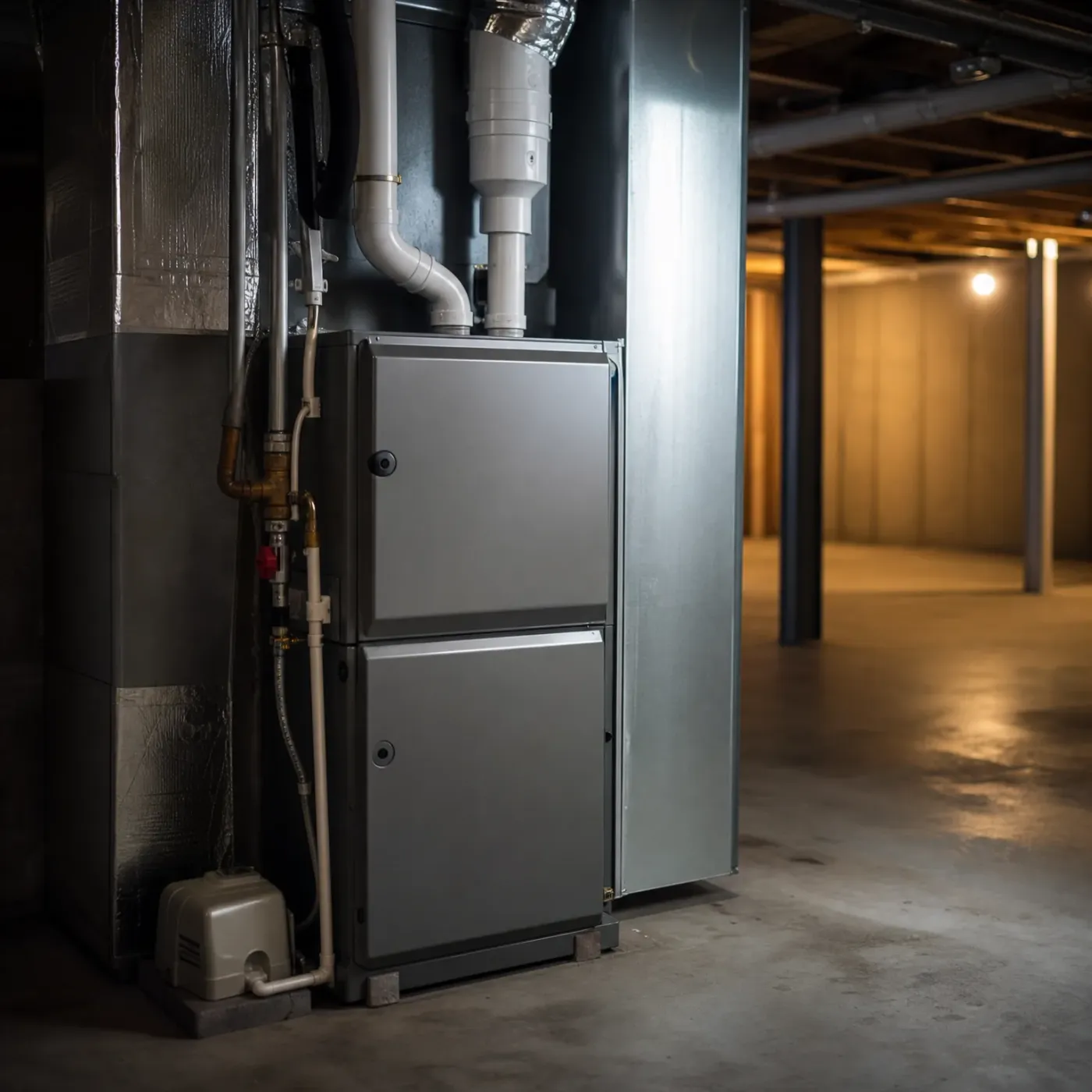
This is a high-efficiency furnace, and you can tell by the two PVC pipes running out the side instead of a metal flue. Intake pulls in air, exhaust pushes out what's left after the gas burns. The ductwork plenum overhead is tight at every seam, so the heat it makes gets to your rooms instead of leaking into the floor joists.

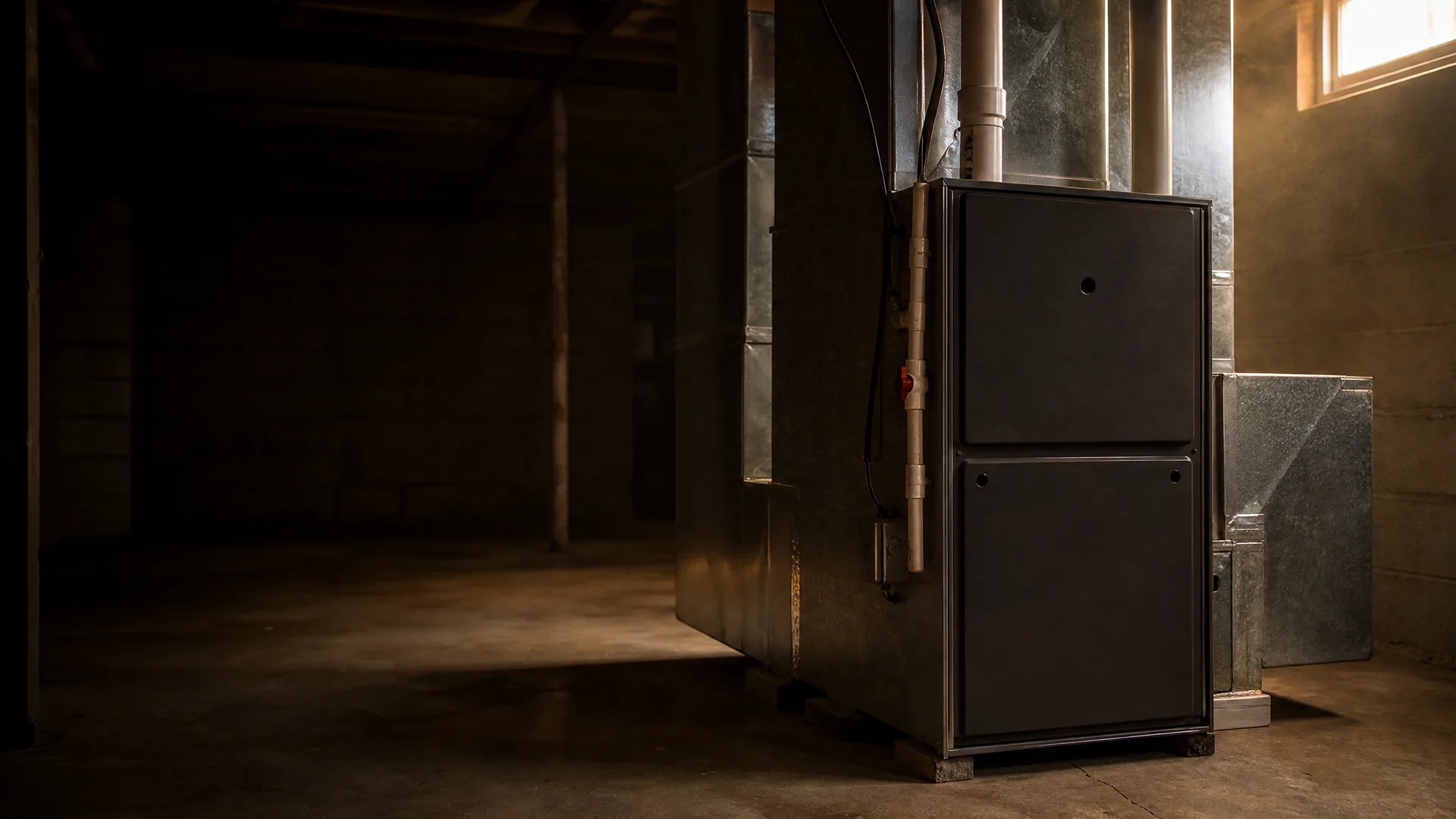
This furnace vents through a flexible metal flue into the block wall, the way older units do. That flue has to stay rigid and sealed to carry exhaust out, and a flexible one is more likely to sag or gap over years of heat and cold. Paired with a cabinet that's aged like this one, it's a furnace closer to the end of its run than the start.

A furnace that holds a steady flame, heats every room evenly, and keeps the gas bill close to last year's is one you can trust through the months ahead. One that short cycles, burns yellow, or leaves cold rooms no matter how high you set the thermostat is already telling you it won't hold up once the deep cold sets in and stays. You don't need to guess which one you have. The signs in this page are the ones worth checking tonight, not in January.
If what you found matches the second furnace, the next step isn't a repair you look up and try yourself. It's getting someone qualified to look at your unit, in your house, before the cold settles in for good. Send the form and a licensed contractor who works on furnaces like yours will reach out to you directly. You won't be the one tracking down who's available or who knows gas furnaces well enough to trust with your house. That part is off your plate once you send it.


A pro who works on furnaces



