Alaska's Furnaces

Why your furnace is leaking water in Alaska

After you send the request, you're done searching.

Hand it off

A furnace that's leaking water is almost always a high-efficiency condensing model, which is common in Alaska gas furnaces because they're built to wring every bit of heat out of the exhaust before it leaves the house. That exhaust produces condensation, and the furnace is supposed to drain it away through a plastic line. The leak means that drain line is clogged, cracked, or draining somewhere it shouldn't, or the condensate pump that moves the water out has failed. It can also mean the secondary heat exchanger that creates that condensation has a crack in it, which is a bigger problem. Either way, water pooling near your furnace during these cold months isn't something to watch and wait on. A clogged drain can trip the safety switch and shut your heat down on its own, and a cracked heat exchanger can leak exhaust into the house.

A gas furnace with two gray access panels stands against a plain wall in a basement, connected to sheet-metal ductwork, white PVC vent pipes, and a yellow gas line.

Where the water actually starts

A condensing furnace sends exhaust through a second heat exchanger before it goes out the vent. That step cools the exhaust enough to turn part of it to water, and that water is supposed to drip into a drain line and out of the house. If that line is cracked, clogged, or pitched wrong, the water backs up and finds its way out of the furnace cabinet instead.

A gray high-efficiency furnace in a basement corner with white PVC vent pipes, copper and black gas piping, and sheet-metal ductwork beside a plain white wall and wooden stair framing.

Why the cold makes it worse

In an Alaska winter, that drain line often runs through unheated space on its way outside. Water sitting in the line can freeze solid, and once it does, every drop behind the blockage has nowhere to go but back into the cabinet. A furnace that only leaks on the coldest nights, and runs dry the rest of the week, is usually pointing at ice in that line rather than a cracked part.

Why does my furnace only leak water when it's really cold out?

You've noticed the leak shows up on the coldest nights and the furnace seems fine when it warms up. That pattern isn't random, and it points to a specific part rather than a general leak somewhere in the system.

Cold air is freezing the condensate line before it can drain

The condensate line often runs through an unheated space, a garage wall or near an exterior wall, before it reaches the drain. When temperatures outside drop hard, that stretch of pipe can freeze solid. Water backs up behind the ice, has nowhere to go, and finds its way out through the furnace cabinet instead. This is common in Alaska because nights get cold enough to freeze a drain line that would never freeze in a milder climate. A contractor who works on furnaces through an Alaska winter knows to check that line's route first, since a frozen few inches of pipe causes the same mess as a cracked drain pan, but the fix is completely different.

A smiling man in a dark navy sweater sits on a light sofa in a living room, with a glass bowl of popcorn on a wooden coffee table and bookshelves behind him.
A smiling man in a dark green sweater sits on a tan leather sofa in a dimly lit living room, with a bowl of popcorn in the foreground and a kitchen area blurred behind him.
A smiling middle-aged man in a dark shirt sits on a gray sofa in a living room, with a bowl of popcorn on a side table and shelves, a window and kitchen area behind him.
A smiling bearded man in a dark gray t-shirt sits on a gray couch in a living room, with a large glass bowl of popcorn on a wooden table in the foreground.

What are you seeing under or around the furnace

You probably noticed a puddle on the floor near the furnace, or a damp spot on the concrete that keeps coming back no matter how many times you wipe it up. Sometimes it's a drip you can hear, water hitting the drain pan or the floor at a steady pace while the furnace runs. You might see water stains on the cabinet itself, rust starting at the base, or a musty smell building in the utility closet. If the furnace sits near drywall or framing, standing water left for weeks can soften that material and invite mold, especially in a closet that doesn't get much air. None of that means the furnace is failing. It means something in the drain path isn't doing its job, and it's worth having a contractor look before the water finds somewhere else to go.

A beige high-efficiency furnace stands on a concrete basement floor beside sheet-metal ductwork, with white PVC vent pipes and a gas line running along an insulated wood-framed wall.

Draining the way it's built to

Here the condensate line runs clear and slopes down to the drain, so water moves out as fast as the second heat exchanger makes it. The trap stays full, the drain stays open, and the furnace cycles on and off without leaving a mark on the floor.

An older metal furnace with a louvered front panel stands against a concrete basement wall, connected to sheet-metal ductwork and a flue pipe, with copper and steel pipes running alongside.

Water that has nowhere to go

This furnace has put years of dust through that same drain path, and dust settles. A clogged line, a cracked trap, or a drain that's frozen somewhere past the wall backs water up into the cabinet faster than the furnace can push it out, and it finds the floor instead.

Winter nights average 9°F statewide

At 9°F on a typical winter night here, your furnace is running long stretches with barely a break. That's more exhaust moving through the second heat exchanger, more condensation forming, and more water trying to find its way out through the drain line and trap.

NOAA nClimDiv 1991-2020 county normals weighted by homes

The leak you can still run with

A clogged drain line or a tripped float switch usually just shuts the furnace down, or it leaks slow enough that you catch it before it spreads. The water is coming from the right place and draining wrong, which is a repair to the condensate line or the trap, not the heat exchanger. A tech clears the line, checks the slope, and the furnace runs the way it's supposed to again. It's still worth fixing before that float switch trips at 2am and leaves you without heat, but it's not doing damage to the furnace itself while you wait a day or two.

The leak that's telling you more

If the water's coming from a cracked heat exchanger or a failed inducer seal, running the furnace keeps pushing exhaust past a part that shouldn't be letting anything through. That's not a drainage problem, and clearing a line won't touch it. Left alone through a stretch of cold nights, it can mean a bigger repair, or exhaust gases ending up somewhere they shouldn't. A local tech who works on these furnaces every winter can tell which one you've got pretty quickly, usually just by tracing where the water actually starts.

A beige gas furnace in a basement with a metal flue pipe, galvanized sheet-metal ductwork to its left, and gas and water pipes along the concrete wall to its right.
Before you get your furnace repair
A gray high-efficiency furnace with white PVC vent pipes stands on a concrete pad in a basement, beside sheet-metal ductwork, copper piping and a poured concrete wall with wood framing at left.
After you get your furnace repair

It's off your list after this

Your request stays with one local pro.

No charge to send it. You decide if you hire them.

Snow-covered gable roof and gray vertical board siding of a building, with snow-laden conifers and falling snowflakes against an overcast sky.

Statewide, winter nights average 9°F, and that cold is what keeps the condensate moving through your furnace in the first place. The colder the exhaust gets pulled down in that second heat exchanger, the more of it turns to water, and the more water the drain line and trap have to carry away without a break. On a night that cold, the furnace doesn't really stop to rest, it just keeps cycling, and a drain line with any slope or clog problem shows it fast. That's usually when you'll find the puddle, not in October, but on the nights the thermometer actually drops.

NOAA nClimDiv 1991-2020 county normals weighted by homes

Call It In Or Watch It

Call it in now

  • A float switch that's tripped or a drain line that's frozen shut will usually shut the furnace off rather than keep leaking, but you're without heat until someone clears it.
  • Letting a slow drip sit means water finding its way to the blower compartment or the circuit board, and that turns a cheap fix into a much bigger one.
  • Running the furnace with a cracked secondary heat exchanger pushes exhaust into the house, and that's not something to wait on.
  • A contractor local to Alaska who works on condensing furnaces all winter knows which part fails first at 9°F and can usually tell from the pattern you describe.
  • Sending one request means one licensed contractor calls, not five companies competing for the job.

Keep an eye on it

  • If the puddle only shows up on the coldest nights and the furnace still heats fine, the drain line or trap is the likely cause and it's not an emergency repair.
  • A small drip you can catch with a towel for a night or two while you arrange a repair isn't going to damage much beyond the floor underneath it.
  • Shutting the furnace off yourself at the switch stops the leak immediately if you'd rather not run it until it's looked at.
  • Watching how the leak behaves, whether it's worse at night, after a thaw, or constant, gives the contractor useful information before they even arrive.
  • Waiting makes sense only if the water is clean, draining from the right spot, and not reaching anything electrical.
A dark interior hallway with a dim window at the end, a wooden floor, a stair railing on the right, and a bench or rug in the foreground.

It's two in the morning and the house is quiet except for the cold. You're standing in the upstairs hallway because something woke you, maybe the silence itself. The vents aren't blowing. You crouch down and feel nothing, no warm air, nothing moving. The window at the end of the hall has frost crawling up from the sill, and the light coming through it is thin and blue. Outside it's deep into the single digits, the kind of night where the furnace should be working hardest, not sitting dead. You head for the stairs, already thinking about the basement, about the puddle you half expect to find down there.

A gray high-efficiency furnace stands on a concrete basement floor beside sheet-metal ductwork, with white PVC vent pipes and a black flexible line running up to exposed wood floor joists, next to a wood-framed post against a concrete wall.
A high-efficiency furnace like this drains condensate through its PVC pipe as fast as the second heat exchanger makes it, so no water collects anywhere.
A beige metal furnace with a louvered front panel stands on a concrete floor against a concrete wall, connected to galvanized sheet-metal ductwork and a metal pipe.
An older furnace leaking at the base often means the drain line, trap, or flue connection has failed and water is finding its own way out.
  1. Burner fires and sends hot exhaust into the primary heat exchanger

  2. Exhaust passes into the second heat exchanger built to pull out more heat

  3. Cooling the exhaust that far turns part of it into water

  4. Condensate drips down into a trap below the heat exchanger

A woman with dark hair in a bun reclines on a sofa with her eyes closed, wrapped in a cream fleece blanket, a closed blue hardcover book resting in front of her, with a lit lamp and a vase of dried flowers in the background.
A smiling bearded man in a navy sweater sits at a candlelit dinner table with a glass of red wine, a bowl of salad, and plates of food in the foreground.

Where this leaves you

  • Water under your furnace means the condensate drain, trap, or line isn't clearing what the second heat exchanger is producing.
  • On a 9°F night your furnace runs long stretches, so a slow drip now turns into a bigger puddle by morning.
  • A tripped float switch or frozen drain line usually cuts the furnace off instead of flooding, but that leaves you without heat.
  • The fix is almost always the drain path, not the furnace itself, so clearing or repairing that line stops the leak.
  • A contractor who works on condensing furnaces all winter here knows the drain line and trap are the first things to check.
  • You'll get matched with one local, licensed contractor for your furnace, not a handful of calls to sort through.

Water under your furnace isn't a mystery once you know what a condensing furnace does. It makes water on purpose, every time it runs, and that water has one job: drain out through the trap and the line without stopping anywhere. When it shows up on the floor instead, something along that path is clogged, frozen, or cracked. The furnace itself is almost never the problem. That's good news, because a drain line repair is a smaller job than it looks like standing over a puddle at eleven at night.

What matters now is getting the right person to look at it. Condensate problems are common enough in Alaska gas furnaces that a local contractor who works on them all winter has probably seen your exact failure already, on someone else's furnace, the week before. They'll know whether to check the trap first or the line outside where it can freeze solid on a night like the ones you've been having. That's the kind of knowledge that comes from doing this work here, in this cold, on this equipment, not from a manual.

You won't end up juggling calls from three or four companies trying to win the job. One licensed contractor, local to you, gets matched to your furnace and your situation. You send the request once, and then it's off your plate. The part that was yours, tracking someone down, stops being yours.

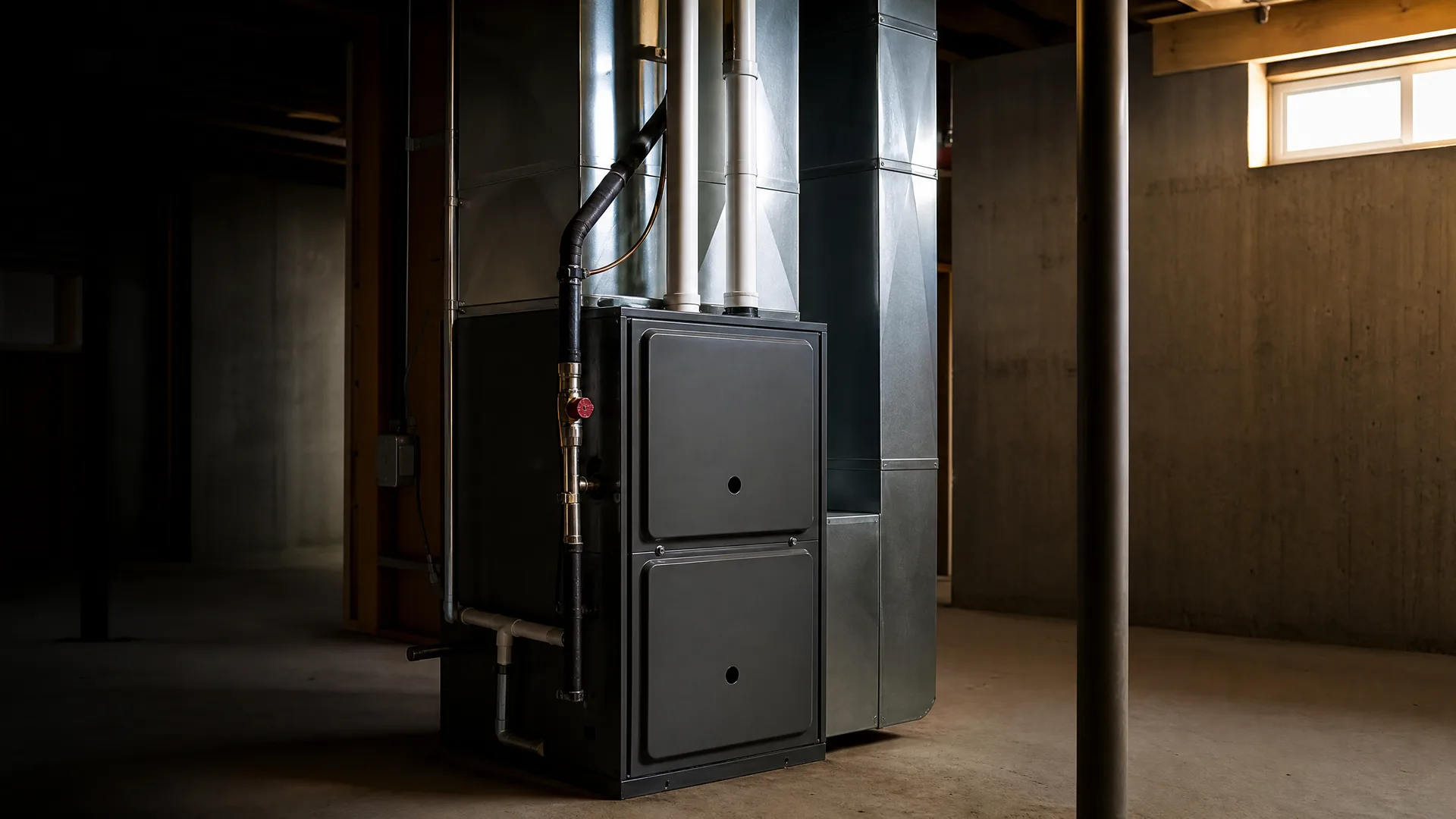
A dark gray high-efficiency furnace with two white vent pipes and connected sheet-metal ductwork stands in an unfinished basement with concrete walls, a support pole, and a small window.

Hand off the search today

Step 1 of 3: Equipment