Why your furnace keeps turning on and off in Alaska

Step 1 of 3: Equipment

A furnace that keeps cycling on and off, called short cycling, usually means it's shutting down before it finishes a heating run and starting right back up. A dirty flame sensor or a clogged filter are common reasons. The flame sensor tells the furnace a flame is actually lit, and once it's coated with residue it can't read the flame right, so the furnace shuts off as a safety measure. A clogged filter cuts airflow, which overheats the furnace and trips its limit switch. A furnace that's too large for your house will also cycle fast, heating the air quickly and shutting off before it's run a full cycle. Up here, where your furnace runs for most of the year and power costs more than almost anywhere else, short cycling adds up fast. Each restart pulls more power than running steady, and a furnace that won't finish a cycle is working harder without heating your house any better. It's worth having someone look at it before a cold stretch asks more of it than it can handle.

A gray high-efficiency furnace with white PVC vent pipes stands beside sheet-metal ductwork and a water heater in an unfinished basement with concrete walls and wood framing.

A normal heating run

The furnace fires, runs for several minutes, warms the house, and shuts off on its own once the thermostat is satisfied. It stays off until the house cools enough to call for heat again. No rapid restarts, no burner cycling every minute.

A beige gas furnace with a metal flue pipe stands in a basement against concrete block walls, beside sheet-metal ductwork, copper and white plastic pipes, and a water heater at right.

Short cycling in an older unit

The burner fires, shuts off after a minute or less, then fires again. In a block-wall basement with galvanized ductwork, this often points to a dirty flame sensor or a clogged filter choking airflow. Left alone, the furnace works harder for less heat, and in Alaska that shows up fast on a power bill already among the highest in the country.

Is this just your furnace, or is something wrong

You'll notice the burner kick on, then shut off after a minute or two, then fire again a few minutes later, all through the day. Some rooms never quite get warm because the furnace isn't running long enough to push heat through the house. You might hear the blower start and stop more than it used to, or catch the furnace clicking off almost as soon as it clicks on. Your gas furnace is working harder to heat the same space, and in Alaska that means it's pulling more power while doing less actual heating. Left alone, a furnace that short cycles can wear out its own parts faster, including the ignition system, since it's starting up far more often than it was built to.

  1. The thermostat calls for heat and the furnace starts its cycle.

  2. The inducer motor runs first to clear the heat exchanger of gas.

  3. The igniter heats up or sparks to light the burners.

  4. The flame sensor checks for a real flame within seconds.

Ignore It or Get It Checked

Leave it alone

  • Each short cycle puts more strain on the igniter and inducer motor than a full, normal run would.
  • A furnace that cycles ten or twenty times a day is wearing those parts down faster than one that runs its course and shuts off properly.
  • Power in Alaska is expensive, and a furnace that keeps restarting instead of running steady is working harder to put out the same heat.
  • Rooms that never quite warm up now tend to stay that way, since the short runs rarely last long enough to catch up.
  • What starts as a dirty flame sensor or a clogged filter can end with a part failing outright in the middle of a cold stretch.
  • Once a furnace is already short cycling, waiting doesn't fix the cause. It just adds more cycles on top of it.

Have it looked at

  • A local contractor who works on furnaces all winter can usually tell within a few minutes whether it's the flame sensor, the filter, or something further in.
  • Clearing a dirty flame sensor or swapping a filter is quick work for someone who does it every week through an Alaska winter.
  • Catching it now means one visit for one problem, instead of a bigger repair later if a strained part gives out.
  • You're matched with one licensed local contractor, not a handful of companies calling about the same job.
  • A furnace running its normal, full cycle again means fewer restarts, less strain on the igniter and inducer, and a house that actually holds its heat.
  • Once the request is sent, you're not the one tracking down who's available. That part is off your plate.
A beige high-efficiency furnace in an unfinished basement, with white PVC vent pipes, a yellow gas line, metal ductwork, and exposed wood framing on a concrete floor.

Running a full cycle

The furnace fires, the burners stay lit, and warm air keeps coming through the ducts until the thermostat is satisfied. The flame sensor confirms the flame once and leaves it alone. You can rest a hand near a vent and feel steady heat instead of air that keeps shutting off.

An older beige furnace with two louvered vent panels stands on a concrete basement floor, connected to galvanized ductwork and a metal flue pipe, with gas piping and flexible conduit on the wall behind.

Shutting down early

The burners light, then cut out after a minute or two, and the inducer motor starts the whole sequence over. An older furnace like this one often has a flame sensor that's picked up a film of soot, or a flue that isn't drafting the way it used to. Either one tells the furnace to quit before the room ever warms up.

A smiling man with dark curly hair in a navy t-shirt sits on a gray couch indoors, with a large-leafed plant and a window in the background.
A bearded man in a plaid flannel shirt stands in a kitchen looking out a window toward snow-covered shrubs, with a steaming mug on the windowsill and potted plants on a shelf behind him.
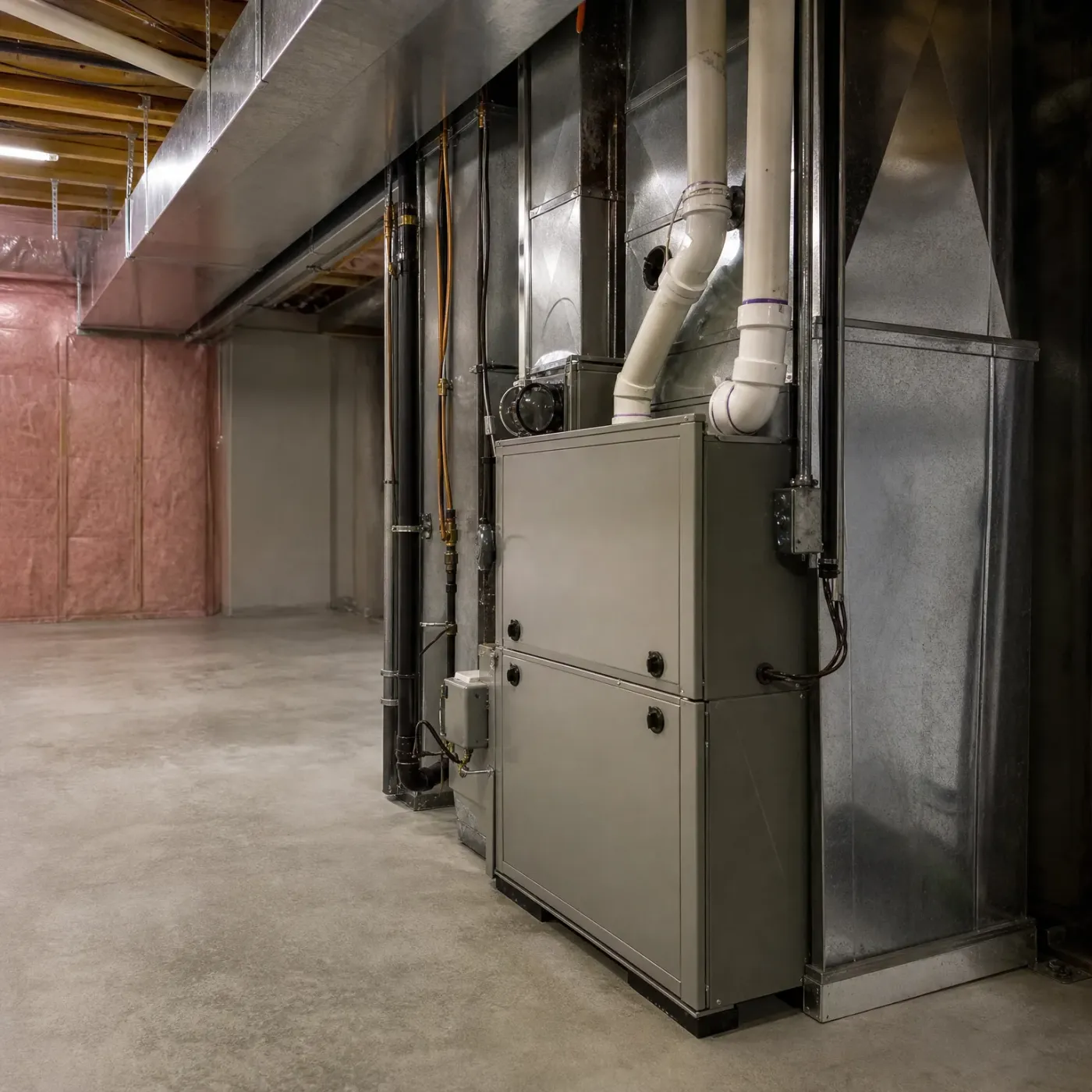
An unfinished basement with a concrete floor, pink insulation on one wall, exposed joists, galvanized sheet-metal ductwork, PVC vent pipes, and a tall gray furnace with attached gas and electrical lines.

Hand off the furnace problem

Your request stays with one local pro.

After you send the request, you're done searching.

Hand off the search

Asking costs nothing, and the choice to hire stays yours.

An older gas furnace with two louvered front panels stands on a concrete basement floor beside galvanized sheet-metal ductwork, pipes, and a weathered concrete wall.
Before you get your furnace repair
A gray high-efficiency furnace in a basement, connected to sheet-metal ductwork on the left and white PVC vent pipes above, with black gas and drain piping and an exposed wood-stud wall with OSB sheathing on the right.
After you get your furnace repair

A furnace running on gas, not electricity

Power in Alaska costs more than almost anywhere else. A gas furnace cycling on and off wastes gas on restarts, but it still beats leaning on electric heat to make up the difference.

Send my request

Short cycling doesn't fix itself

A dirty flame sensor or clogged filter won't clear up on its own. Left alone, the igniter and inducer motor keep absorbing restart after restart until one of them fails.

Send my request
A smiling man in a gray long-sleeved shirt stands in a kitchen looking to the side, with open shelves of dishes, a white mug on the counter, a potted plant, and a view through a doorway into a living room.
A smiling bearded man in a green sweater sits at a white marble kitchen island with a mug, potted plant and bowl of fruit, in a bright white interior with open shelving and an arched doorway.
A smiling man with dark curly hair and a beard, wearing a dark green knit sweater, stands at a white marble kitchen counter with a dark blue mug, with open shelving, pendant lights and a houseplant behind him.
A smiling man in a green ribbed sweater stands behind a wooden table holding a ceramic mug of coffee in a kitchen with white subway tile, shelves of potted plants, and a bowl of fruit.
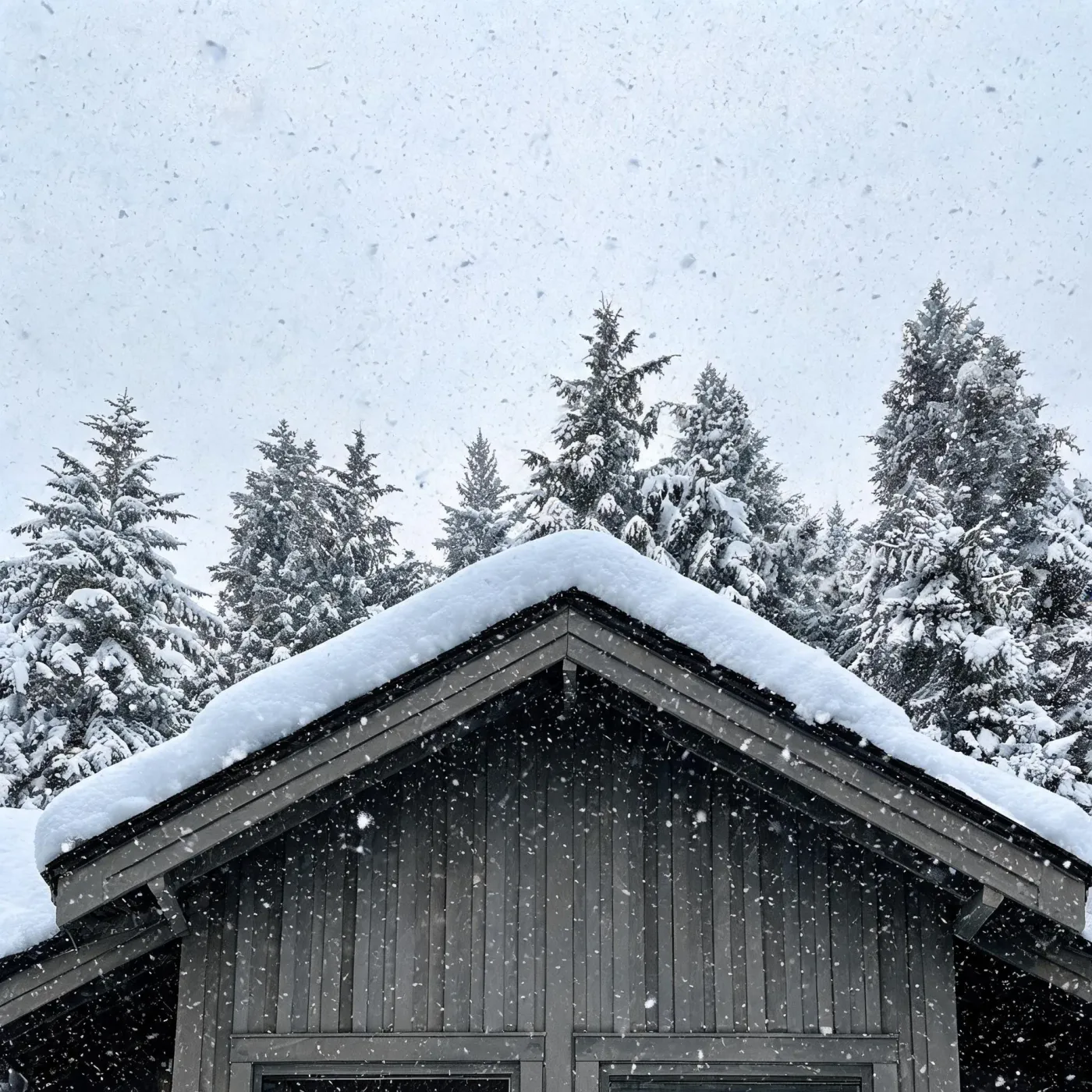
The gable end of a dark wood-clad building with a thick layer of snow on its roof, with snow-covered conifers and falling snowflakes behind it under a pale sky.

Winter nights average 9°F across Alaska, according to the National Weather Service. At that temperature your furnace should be running long, steady cycles most of the night, not short bursts. When it's short cycling instead, it's firing up more often to chase the same heat loss through doors, windows, and walls, and each restart uses more gas than the run itself would. You'll likely notice the house losing warmth faster than it should overnight, and the burner working harder to catch back up by morning. Cold snaps like this are exactly when a short-cycling furnace falls furthest behind, since it never gets the long run it needs to push heat through the whole house.

NOAA nClimDiv 1991-2020 county normals weighted by homes

A gray high-efficiency furnace with white PVC vent pipes stands against a concrete basement wall beside sheet-metal ductwork, a small condensate pump on the floor, and exposed wood framing at left.
This furnace fires once, burns steady, and sends heat through the PVC flue and ductwork until the thermostat is satisfied.
A gray sheet-metal furnace with flue pipe and adjacent ductwork stands against a stone basement wall on a concrete floor, with white PVC and metal pipes running nearby.
This older furnace, boxed in by gas lines and flex tubing, is working through a cycle that keeps cutting short.
A dim unfinished basement with concrete walls, exposed floor joists, a small window, and a furnace connected to metal ductwork and PVC venting.

It's just past six, already dark outside. The thermostat reads sixty-two, five degrees under what you set it to. You've been standing by the basement stairs for a few minutes now, waiting to hear the burner catch again, but the furnace sits there dark and quiet. A thin haze of dust still hangs in the air near the cabinet from the blower kicking on and off all afternoon. You put a hand near the vent. Nothing. Upstairs the kids have their hoodies on. You check the thermostat again, like that'll change something, then head down to see if the pilot light or the panel will tell you anything.
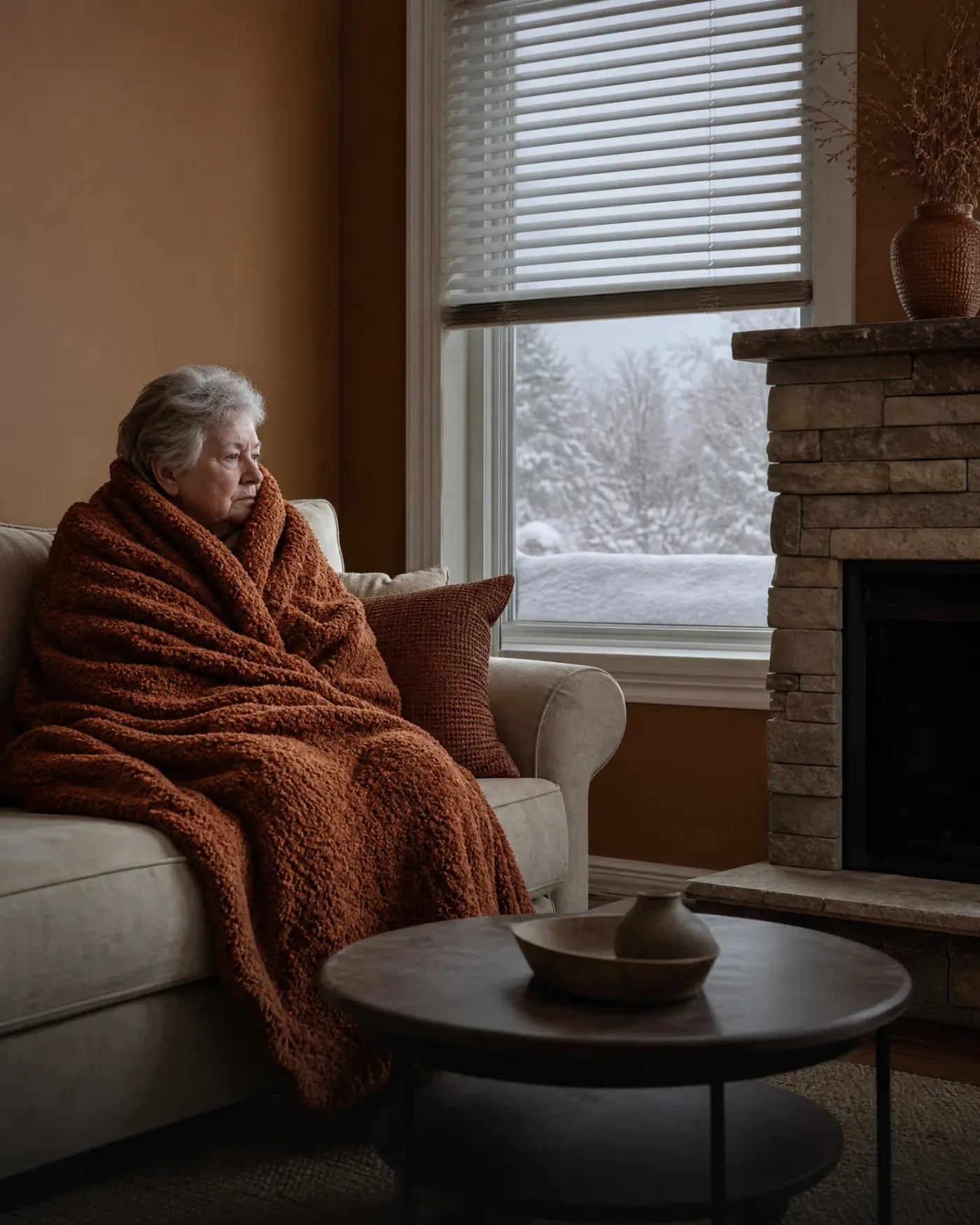

Winter nights average 9°F statewide

At 9°F outside, your furnace should be firing once and running long, not stopping every few minutes. Short cycling at that temperature means it's working harder and still falling behind on the heat your house actually needs.

NOAA nClimDiv 1991-2020 county normals weighted by homes

What to do about it now

  • A furnace that short cycles is telling you something specific is wrong, not that it's simply getting old.
  • The flame sensor, the filter and the igniter cause most short cycling, and a contractor who works on furnaces all winter in Alaska checks those first.
  • Leaving it alone wears down the inducer motor and igniter faster, parts that cost more to replace than to catch early.
  • A licensed local contractor who already knows the furnaces common in your area can usually spot the cause faster than a guess over the phone.
  • Sending one request means one contractor gets back to you, not a string of calls from companies you didn't ask for.
  • Catching this now, while it's a sensor or a filter, is what keeps it from becoming an inducer motor or a cracked heat exchanger later.

Short cycling has a cause. It's almost always the flame sensor, the filter or the igniter, and it doesn't get better by waiting. Every cycle that cuts short puts more wear on the inducer motor and the igniter than a full run would, and those parts cost more to replace than a sensor would have cost to clean.

Someone who works on furnaces all winter in Alaska has seen this pattern before, on the same models that are common here, and knows which part to check first instead of guessing. That's the advantage of a local contractor over a general search: they've already traced this exact problem on furnaces like yours, in houses that get as cold as yours does. You send one request, and it goes to one licensed contractor, not a handful of companies competing for the callback. No string of calls to sort through, no repeating your situation five times over.

Right now your furnace is firing, shutting down early, and firing again, burning more gas on restarts than a normal cycle would and still leaving rooms short of warm. That's not a furnace wearing out on its own. It's a specific part telling the system to stop before it should, and it's the kind of thing a contractor who knows these furnaces can usually identify quickly once they're looking at it. Left alone, the parts doing the extra work now are the parts that fail later, at a worse time and a higher cost. Caught now, it's a repair. Caught later, it's a replacement.

A dark wood cabinet with a paneled door and a ceramic pot of green foliage on top stands in a beige-walled room with white baseboard, a window at left, hardwood floor, and a patterned area rug.
A dark wood glass-front cabinet holding folded towels, woven baskets and a ceramic vase stands in a bathroom corner beside a window, with a potted fern and stacked towels on top and a freestanding tub partly visible at left.
A woven basket holding a green cushion and a cream fringed knit throw sits on a wood floor in a room corner beside a window and a dark wooden cabinet.
Corner of a room with a dark wood cabinet topped by a round vase, a linen curtain at a window, white baseboard, oak plank flooring with sunlight patches, and a woven jute rug in the foreground.
A dark wood sideboard against a pale wall holds a shallow stone bowl and a round ceramic vase with leafy branches, with sunlight from a curtained window falling across the wall, wood floor and woven rug.

Finding a pro stops being your job

The pro who reaches out is licensed in Alaska.

Find a licensed pro

Sending the form costs nothing.