Tell us about the job
Takes about a minute. No obligation.
A contractor quoting a furnace repair in Nome Census Area works out what the burner, heat exchanger, and ignition system have already been through before settling on a scope. Homes in Nome Census Area, AK run heat in every month of the year. The ignition system fires every cycle, the heat exchanger flexes with every temperature swing, and neither gets a long idle stretch where minor faults stay minor. Cracks, fouling, and worn igniters show up sooner here because there is no quiet season to hide in. A contractor checks those components first.
Furnace parts availability is what shapes the repair bill in much of Nome Census Area. Half the homes in Nome Census Area, Alaska were built in 1985 or earlier (2020-2024 ACS 5-year). Housing built that long ago was fitted with heating systems that have been cycled out and replaced at least once since, and the units now running in those houses are old enough that what a contractor finds inside the cabinet may not match what a distributor stocks. A heat exchanger crack or a failed inducer motor becomes a sourcing problem as much as a mechanical one, and that sourcing question is answered only after the unit is open.
The Parts of a Furnace a Contractor Checks First
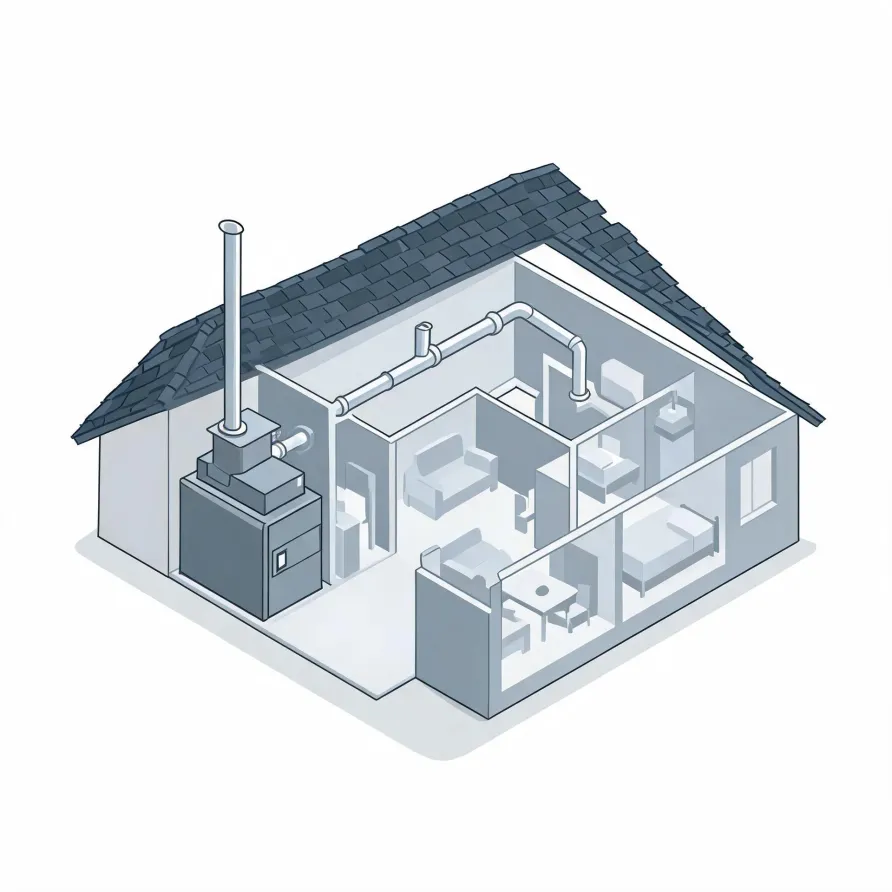
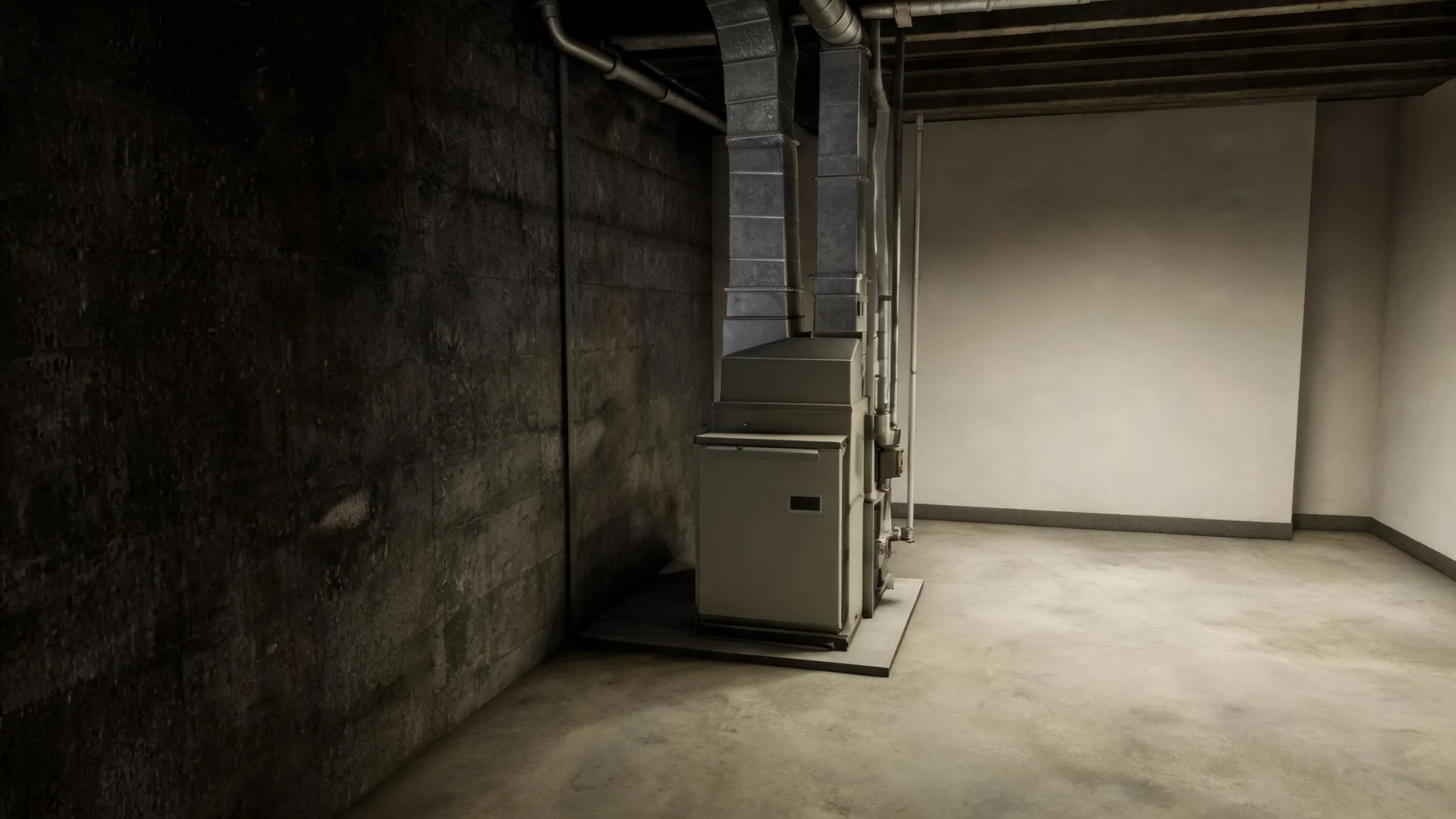
The furnace cabinet sits in a utility room, basement, or closet and is the heart of the system. Inside it, the heat exchanger is what a contractor goes to early when there is a heating problem, because a crack there means combustion gases can reach living spaces. The burner assembly, igniter, and flame sensor all live inside that cabinet too, and any one of them can stop a furnace from firing.
The blower motor sits at the base of the cabinet and pushes conditioned air out through the supply side of the house. The flue pipe runs from the cabinet up and out of the structure, and a contractor checks it for blockage or deterioration when the furnace runs poorly or not at all. The thermostat, mounted on an interior wall, is where the signal originates, and a faulty one can mimic a much larger problem.
The drawing shows a typical furnace layout, and a licensed contractor determines which components apply to your specific home and situation.
Find a contractor in Nome Census AreaNome Census Area by the Numbers
37 severe weather events were recorded in Nome Census Area, Alaska between 2015 and 2024.
NOAA National Centers for Environmental Information, Storm Events Database, bulk CSV export, events 2015-01-01 through 2024-12-31.Half the homes in Nome Census Area, Alaska were built in 1985 or earlier (2020-2024 ACS 5-year).
U.S. Census Bureau, 2020-2024 American Community Survey 5-Year EstimatesNome Census Area, Alaska holds 4,102 housing units (2020-2024 ACS 5-year).
U.S. Census Bureau, 2020-2024 American Community Survey 5-Year EstimatesOwners occupy 66.8% of the occupied homes in Nome Census Area, Alaska (2020-2024 ACS 5-year).
U.S. Census Bureau, 2020-2024 American Community Survey 5-Year EstimatesCodes & Standards Governing Furnace Repair in Nome Census Area, Alaska5 sourced rules and standards
What HVAC Repair Looks Like in Nome Census Area
Non-weatherized gas furnaces manufactured on or after November 19, 2015 must reach 80.0 percent AFUE.
Non-weatherized oil-fired furnaces manufactured on or after November 19, 2015 must reach 83.0 percent AFUE.
Mobile home gas furnaces manufactured on or after November 19, 2015 must reach 80.0 percent AFUE.
Non-weatherized gas furnaces manufactured on or after December 18, 2028 must reach 95.0 percent AFUE, up from the 80.0 percent minimum that applies to units manufactured before that date.
Licensing Rules for HVAC Repair in Nome Census Area, Alaska
Alaska requires a certificate of registration as a contractor: a person may not submit a bid or work as a contractor until the department has issued one.